Before we could start working, there were a few things we had to take care of first.
Gathering Requirements
The team visited the theater to see what we working with and to meet the clients.
This was the costume room. Hundreds, maybe thousands of costumes were hung up across 11 racks.
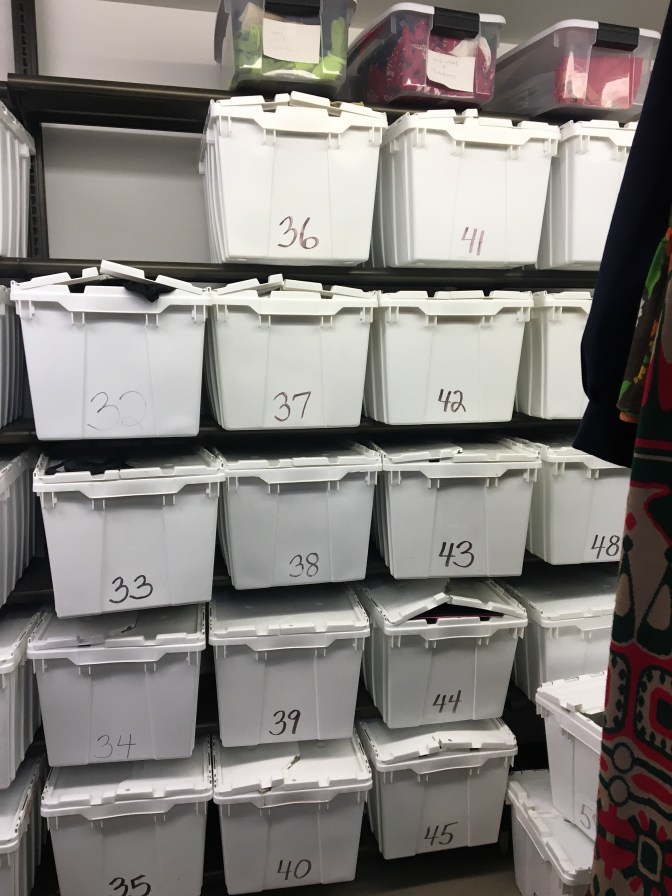
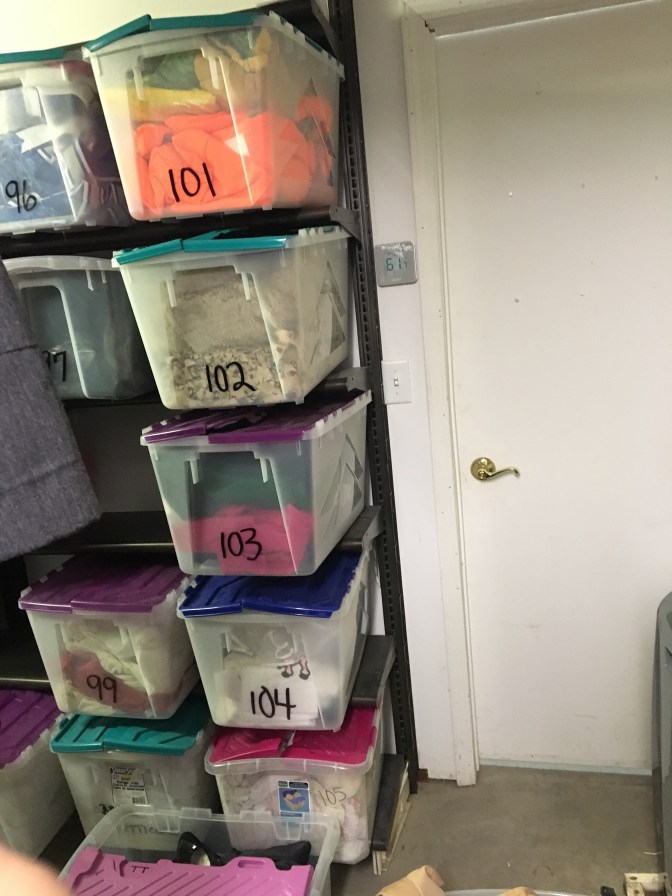
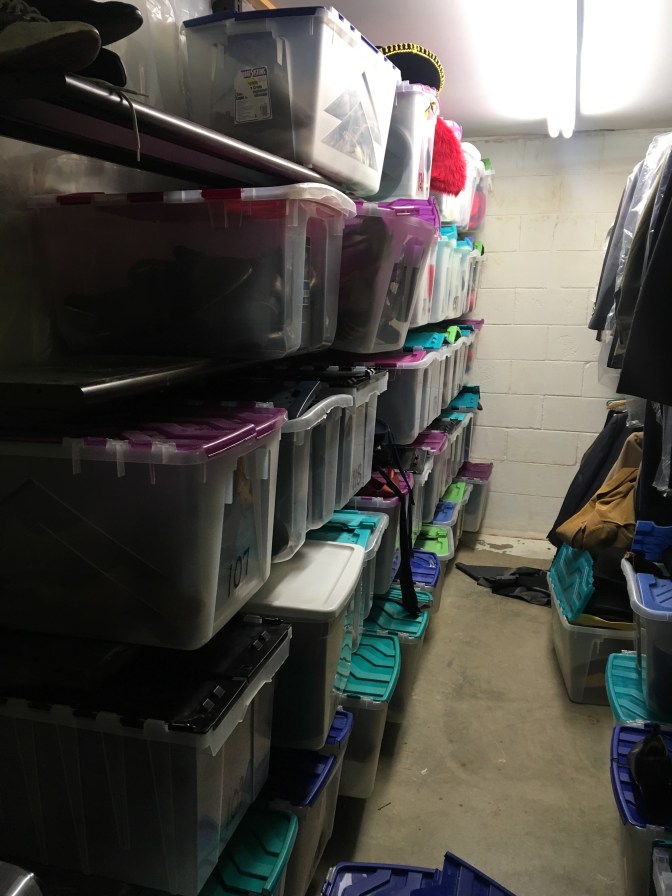
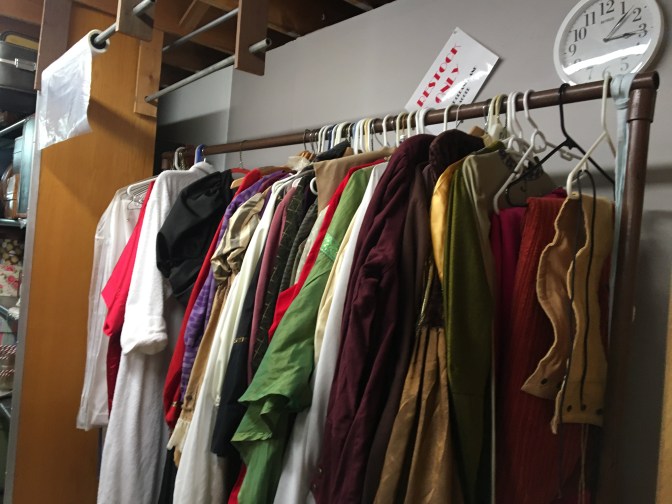
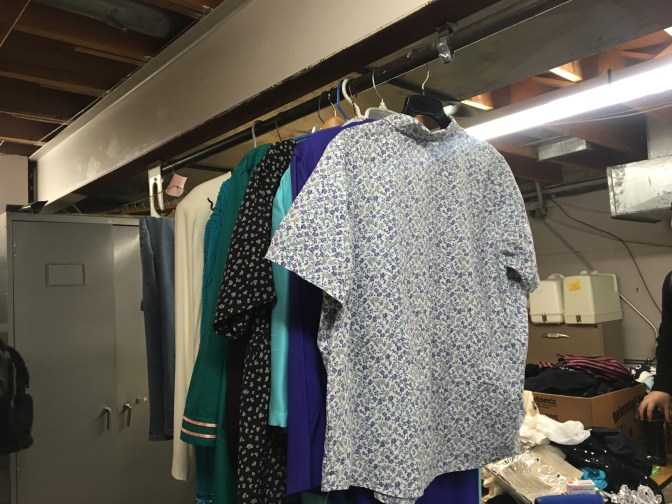
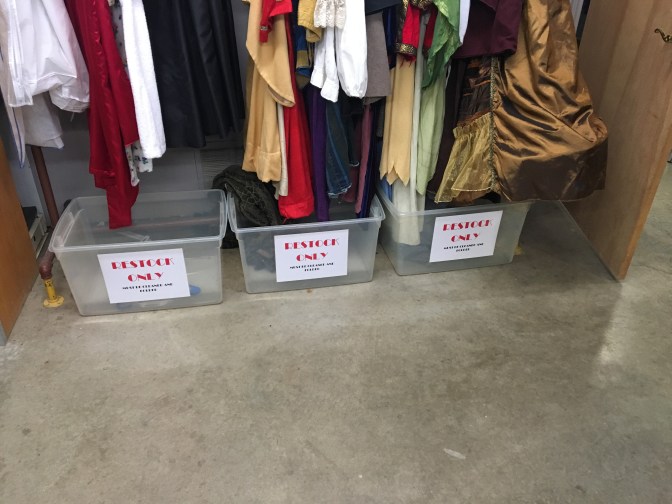
In addition to the racks, bins of costumes, shoes, and accessories lined the walls and floors. Each bin had a number on it.
Our client was the expert and knew where most costumes were by heart. But the problem was that she was the only one. If she left, the next costume coordinator wouldn’t know where to start. We needed to design a system that would allow anyone to log in and be able to locate a costume.
Scrum Startup
Before we began designing and developing, there were a couple things we needed to knock out.
Working Agreement
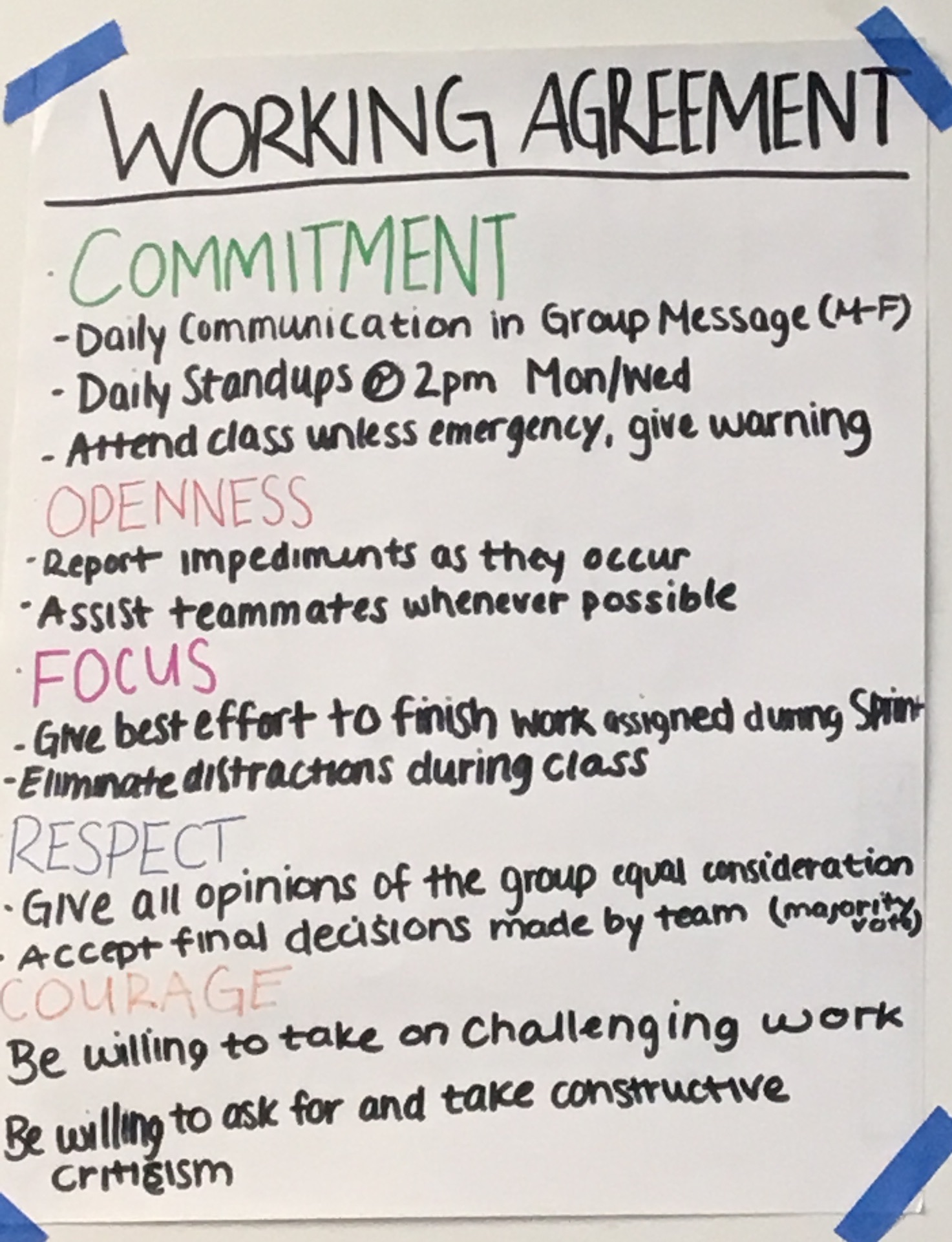
After visiting the theater, our team’s first move was to create a working agreement. The Working Agreement outlined several rules and values our specific team would abide by. While the Working Agreement is not mentioned in the official Scrum Guide, we found it important to lay out some ground rules to avoid conflict later. Mignesh Murphy has a great post about working agreements here.
Definition of Ready & Definition of Done
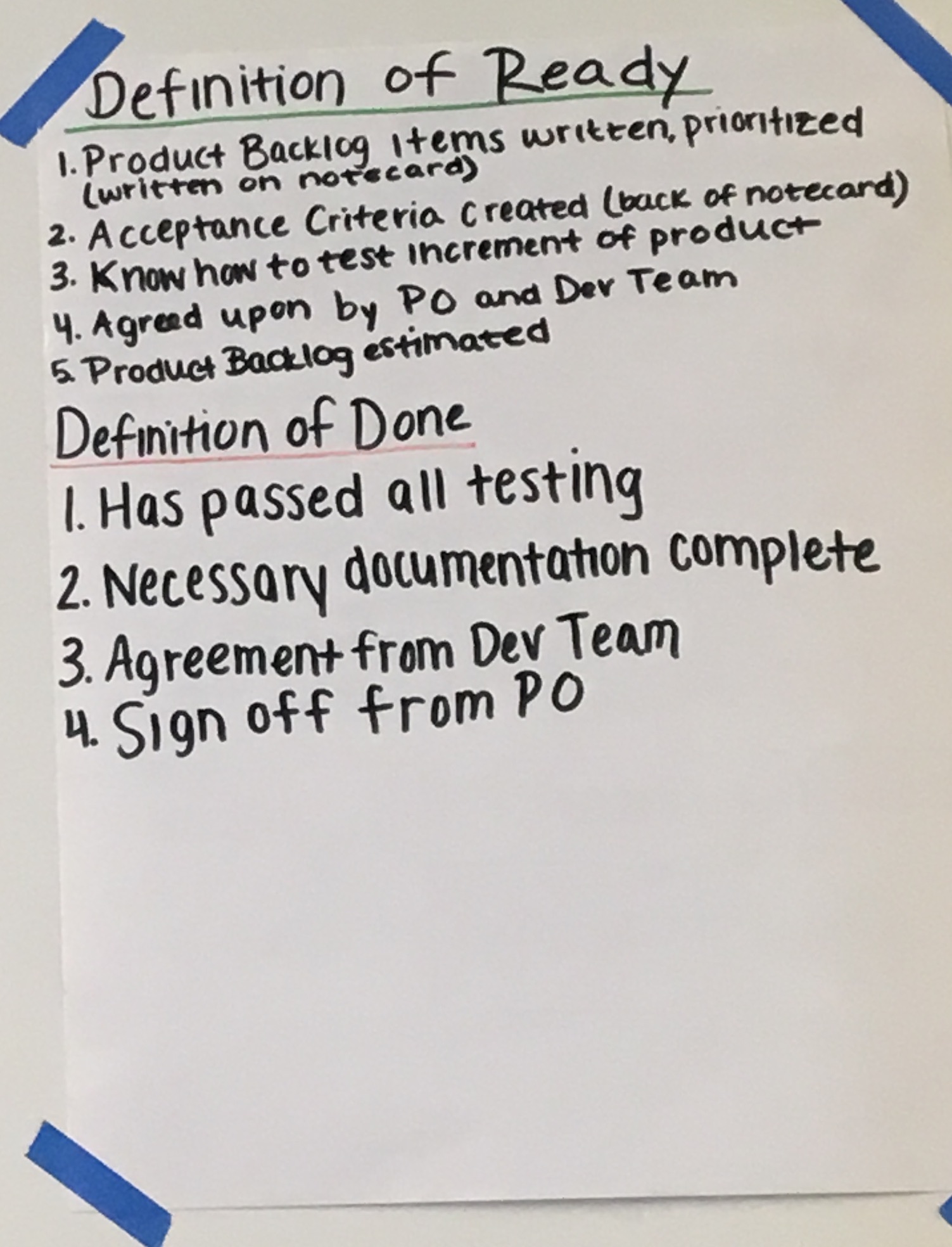
The Definition of Done is mentioned in the Scrum Guide. Our team used the Definition of Done to lay out the explicit requirements for a story to be completely finished. (A story is a task or feature within the project.) This forced everyone to only submit truly completed work, and helped prevent bugs and headaches down the road.
The Definition of Ready is not mentioned in the Scrum Guide, but it is very similar to the Definition of Done. Before anyone could start work on a story, the story had to meet the Definition of Ready. This prevented misunderstandings between the people who wrote the stories and the people who actually developed the stories.
Writing Stories
Next we wrote out our user stories. The team sat down and came up with every user feature the client might appreciate and require. These stories formed the product backlog, or list of work that was not yet started. Once we had written each story, the team discussed the difficulty of developing each story. An arbitrary number representing the difficulty was decided on and assigned to each story.
With the requirements gathered and a few rules set, we were ready to start Sprint 1!
 ACC 362 Individual Project